
Come, sit.
Let us tell you about how we got here, and where we are going.
About the Issue
About ARMADA
Resources [COMING SOON]
We analysed major reports, policies, and podcasts from across the European food space, and we couldn’t see language, ideas, or numbers that reflect the food movement as we experience it.
There is almost zero comprehensive data on Black and Brown-owned farmland.
The mainstream focus on authentic European heritage consistently defaults to a historically white past while ignoring the plural-identity reality of our landscapes.
We couldn't hear BIPOC thought-leaders platformed in the food movement.
We couldn’t see agriculture and social justice organisations in deep collaboration.
We couldn’t feel racial equity in permaculture projects.
We couldn’t interpret language about racialized class divides in consumer-focused campaigns.
We couldn’t see people of colour outside of a problematic poverty lens.
This doesn’t mean it doesn’t exist.
Our story about food is largely told as if BIPOC folk are the others from countries outside whose resilience is dissected and disconnected from our communities here.
When we spoke to allies and communities on the ground, the exact same reflection came up again and again: I don't know how we got here, but the food movement is overwhelmingly white.
This monocultural storytelling is actively damaging the future of our food; it strips our landscapes of their colour and deepens systemic inequities far beyond the agricultural fields.
Armada reflects what contemporary decolonial ecologists and rural ecofeminists have taught us: you cannot separate the exploitation of the earth from the exploitation of bodies.
Especially, but never limited to, racialised bodies.
We are talking about food, but we are certainly not just talking about food.
We are talking about governance, identity, and whose lives are deemed worthy of having agency over what we put in our body.
It starts at the table.

A story that erases so many of us is a structural failure.
The food system is designed for whiteness, but our communities have always had colour - from the mountains of Italy to the beaches of southern Spain, our communities and the food they grew have always been diverse and expansive.
People who are dual nationals, those with plurinational identities, and the descendants of migrants who hold vital ancestral knowledge from our home countries.
It ignores the diverse communities who weave transnational resilience into the fabric of European neighbourhoods every single day.
It erases Europe’s food movement’s biggest asset.
The story of food here in Europe is outdated, and we are here to bring it up to par because we believe in a food system that reflects all of us.
To change the story, we first have to understand it.
A food system that leaves many of us out of the story.
A food system that is facing the hardest moment of our time.
A food system that can feed us all, if it reflects us all.
ARMADA is a narrative and community organising lab built to fill this exact void. We are strategists, descendants of migrants, culinary reclaimers, and land workers building the structural infrastructure required to govern our own food systems and shift power on our own terms.
We started ARMADA because we see a food system that does not reflect all of us. A food system that continues to be predominately built on the myth of whiteness; that does not have infrastructure to hold intersectional collaboration; and that often blurs the complexities that make up our communities.

narrative infrastructure
because whoever writes the story writes the policy. Right now, the language of the green transition is highly technical and institutional; it reduces human survival to carbon metrics and supply chain logistics. We are actively shifting this by building a public storytelling ecosystem that positions diaspora networks, BPOC chefs, and migrant landworkers as the central experts of European sustainability. We track the hidden data, publish the lived realities, and create the strategic communication frameworks needed to force true inclusion into the mainstream.
We focus on

community organising across silos
because systemic change demands coordinated friction. Right now, environmental NGOs, migrant labour unions, and cultural food advocates operate in complete isolation from one another. We act as active facilitators between these spaces. This movement requires all hands on deck; we are holding space to bring mainstream environmentalists, institutional policymakers, grassroots landworkers, and diaspora leaders to the exact same table. By centering BPOC leadership while building deep, cross-sector solidarity, we can design transnational campaigns that actually challenge the status quo.
deep listening and mapping of what stories exist and why.
When we find out exactly who holds the power, money, and land across the sector, we can co-design the mechanisms to shift those resources directly back to the frontlines.
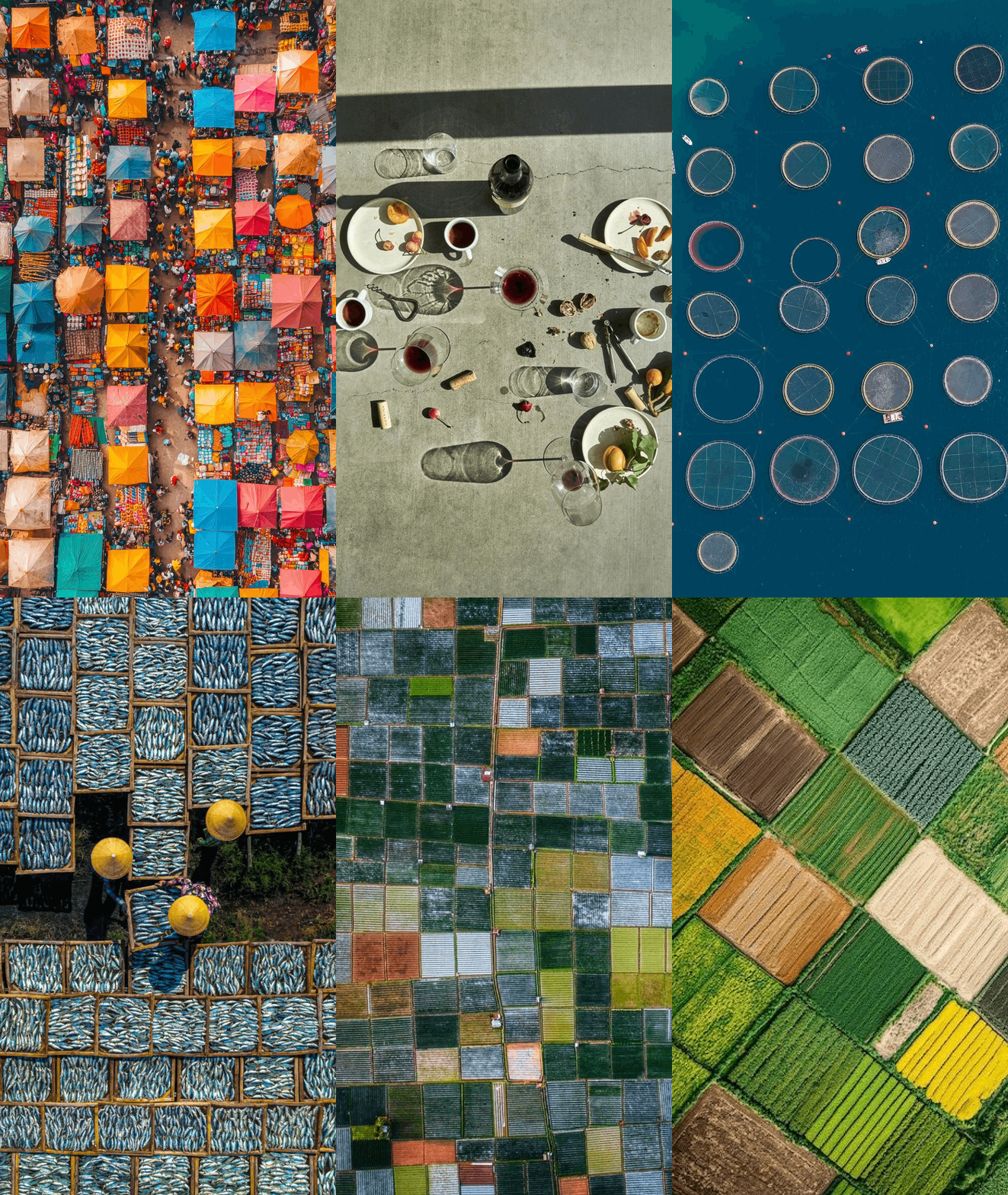
We can only do this with you.
Food is a gateway to imagine an equitable future that reflects us all. It is as simple as ensuring that all people have access to nutritious meals, and it is as complex as using shared plates to reconcile colonial histories and spark deeper conversations about migration, identity, and the right to belong.
This space is about gathering the knowledge that usually gets left out of the official reports, policy spaces, and funding rounds. We are holding space for the stories of colour that actually make up our food. You are a part of the story we are listening to, and your reality will be part of the story we tell.